
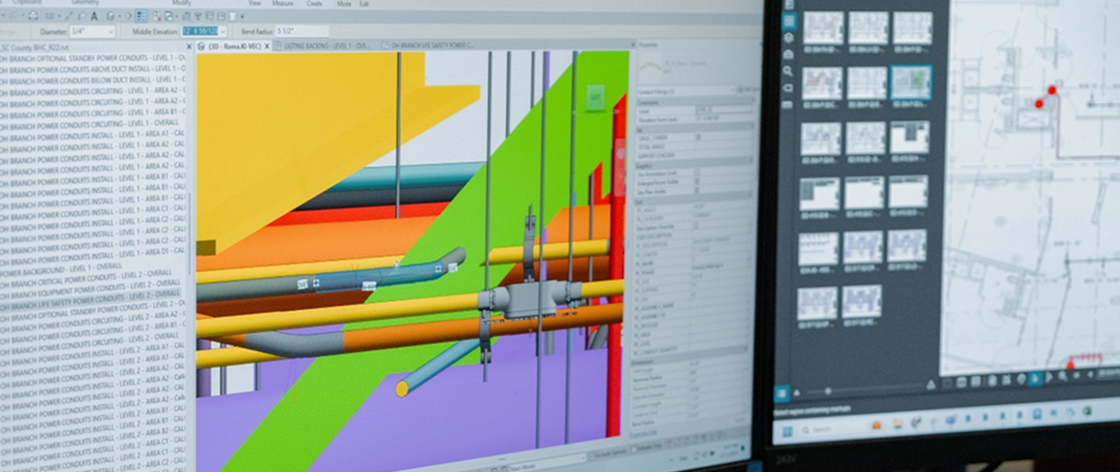
VEC’s MEP constructability review emphasizes clear markups and optimized system routing. These crucial initial steps facilitate the development of buildable models and shop drawings. Our mechanical & plumbing BIM experts analyze existing drawings and specifications in detail to ensure effectiveness. Our primary goal is to identify potential field issues and present viable solutions for construction.These solutions involve different aspects such as access requirements, routing optimization, VE (value engineering) options, and general design clarifications.

Understanding Constructability Review and Routing Optimization

Constructability review involves thoroughly examining and assessing the project design, plans, and specifications before construction begins. The primary purpose is to identify potential challenges, conflicts, or limitations that may arise during construction. Project teams can proactively address design issues, material constraints, and logistical problems to avoid delays and errors later. The ultimate goal is to ensure the proposed design is feasible and constructible.
Routing optimization refers to the efficient planning and layout of pathways for building systems like plumbing, electrical, and HVAC. The aim is to create the most logical and streamlined routes within the building's structure. Proper routing optimization has significant benefits such as reduced material waste, improved energy efficiency, enhanced functionality, and easier maintenance and repairs.
What Sets Our Constructability Review & Routing Optimization Apart
Industries That Benefit from Constructability Review & Routing Optimization

Constructability and routing optimization are critical for data centers to design the layout of servers, networking equipment, and power distribution systems to maximize performance and minimize energy consumption.

In healthcare facilities, these coordination workflows help design optimal layouts for medical equipment, patient rooms, and utility systems like HVAC to ensure smooth patient flow, staff efficiency, and compliance with safety standards.

For energy-related projects, constructability and routing optimization are used to plan the routing of pipelines, transmission lines, and infrastructure for renewable energy facilities to ensure smooth operation and minimal environmental impact.

Constructability and routing optimization play a significant role in designing airports, seaports, and railway stations to optimize the flow of passengers, baggage, and cargo while considering security, accessibility, and interconnectivity.

Constructible MEP systems with optimized routing are critical in pharma & life science facilities, supporting efficient research and manufacturing workflows while ensuring compliance with stringent cleanrooms, ventilation, and waste disposal requirements.

Constructability and routing optimization are used in commercial buildings to plan MEP systems, office layouts, and common areas to create a comfortable and functional workspace.

In residential projects, constructability and routing optimization help optimize the layout of housing units, utility routing, and shared spaces to improve overall livability.

In educational buildings, it is critical to ensure that classrooms, laboratories, and common areas are constructible and optimized for efficient routing to support learning environments and smooth student movement.